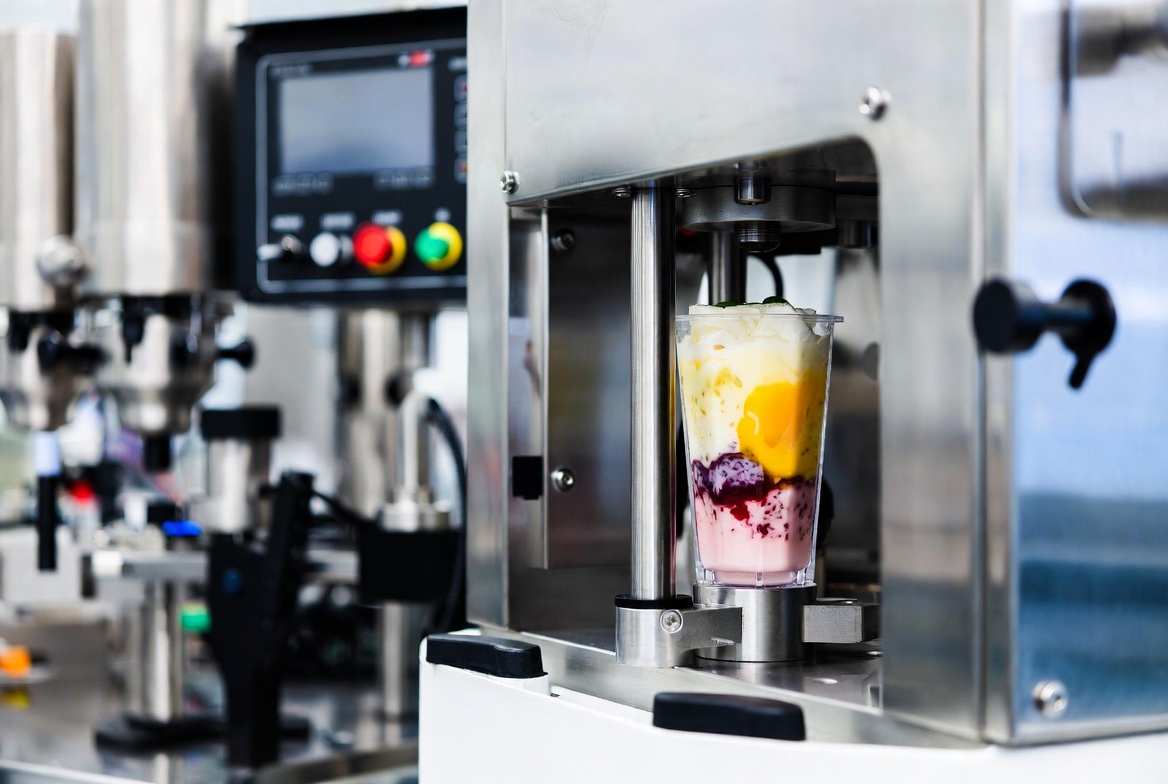
Food and Beverage Automation
The food and beverage industry is evolving rapidly as consumers demand better taste, higher nutritional value, wider product variety, and sustainable production practices. To stay competitive, manufacturers must adapt to changing market conditions while managing rising costs, workforce shortages, and operational risks.
Automation plays a critical role in helping food and beverage producers improve efficiency, flexibility, and long-term resilience.
Smart Manufacturing for a Dynamic Market
Modern food and beverage production requires connected and agile operations. Disconnected systems and aging equipment reduce visibility, increase downtime, and limit the ability to respond quickly to market changes.
Smart automation enables manufacturers to:
- Adapt production lines to changing consumer demand
- Improve coordination across operations
- Reduce manual intervention and complexity
- Make faster, data-driven decisions
By integrating digital technologies across production, companies gain greater control over quality, throughput, and costs.
Industry Challenges in Food and Beverage Manufacturing
Food and beverage manufacturers face several persistent challenges, including:
- Increasing raw material and energy costs
- Workforce shortages and skill gaps
- Equipment obsolescence and maintenance risks
- Cybersecurity threats to production systems
- Growing expectations around sustainability and compliance
Without modernization, these challenges directly impact profitability and operational stability.
Driving Agility Through Digital Transformation
Digital transformation is essential for operational agility. Modern automation systems connect machines, processes, and data into a unified environment, enabling real-time insights and faster response times.
Key modernization benefits include:
- Reduced risk of equipment obsolescence
- Simplified workforce requirements through integrated control
- Improved cybersecurity with modern architectures
- Lower total cost of ownership through system consolidation
These improvements help manufacturers remain competitive in a fast-changing market.
Optimizing Production to Improve Yield
Disconnected production systems limit visibility across plants and production lines. When systems are connected, manufacturers gain real-time insights that support continuous optimization.
Automation enables producers to:
- Increase yield and throughput
- Reduce variability in production
- Improve product consistency and accuracy
- Detect issues earlier in the production lifecycle
This level of visibility allows optimization at every stage, from raw material intake to finished goods.
What Is Food and Beverage Automation?
Food and beverage automation refers to the use of digital control systems, intelligent machines, and data-driven technologies to manage and optimize production processes with minimal manual intervention.
Automation is applied across mixing, processing, filling, packaging, quality inspection, and material handling operations to ensure consistent and efficient production.
Benefits of Food and Beverage Automation
Well-implemented automation delivers measurable business value:
- Higher production efficiency with reduced downtime
- Improved product quality and food safety
- Lower operational costs through optimized resource use
- Better data visibility for informed decision-making
- Greater scalability and flexibility to support growth
These benefits support both short-term performance and long-term sustainability.
Types of Food and Beverage Automation
Automation technologies can be applied across different production areas, including:
- Automated filling and dosing systems
- Conveyor and material handling automation
- Packaging, case packing, and palletizing
- Vision-based inspection and quality control
- Energy monitoring and optimization systems
- Predictive process control and analytics
Choosing the right automation strategy depends on production goals, product complexity, and operational scale.
Sustainability and Energy Efficiency
Automation also supports sustainability initiatives by:
- Reducing energy consumption
- Minimizing waste and rework
- Improving resource utilization
- Supporting consistent and accurate production
Efficient operations help manufacturers meet environmental targets while maintaining profitability.
Conclusion
Food and beverage automation is no longer optional. Connected, data-driven production systems enable manufacturers to respond faster to market changes, improve yield and quality, reduce costs, and build resilient operations. Automation provides the foundation for efficient, scalable, and sustainable food and beverage manufacturing.
See how our solutions can optimize your workflows, enhance productivity, and achieve measurable results.